Bombarded, transformed into a prison, abandoned and then beautifully restored between 1997 and 2000, this architectural gem now offers travellers a free glimpse into the fascinating past of the Emirates. Prepare to discover spectacular panoramic views, ingenious defensive architecture and an atmosphere steeped in history that will transport you to the era of caravans and maritime conquests.
A Turbulent History Spanning the Centuries
The history of Fujairah Fort begins somewhere between 1500 and 1550, a period when two theories clash: some historians suggest Portuguese construction aimed at controlling the trade routes of the Indian Ocean, whilst others favour the hypothesis of a local fortification erected by Arab tribes to protect themselves from invaders. This very uncertainty testifies to the exceptional antiquity of the site.
Between 1650 and 1700, the fort underwent a first major renovation phase, reinforcing its defences against growing threats. But it was in the early 19th century that the edifice experienced one of its most dramatic chapters: from 1808 to 1810, Wahhabi forces occupied the fortress, attempting to extend their influence in the region. After their departure, the fort radically changed its vocation to become a prison, a function it would retain well into the first decades of the 20th century.
In 1925, history took a violent turn when HMS Lawrence, a British vessel, bombarded the structure as part of the regional tensions that marked the colonial era. Severely damaged, the fort was then gradually abandoned, its walls cracking under the effects of time and weather. It would take the intervention of the Fujairah Antiquities Administration, which undertook meticulous restoration between 1997 and 2000, for this essential witness to the emirate's defensive identity to regain its splendour.
Defensive Architecture of Remarkable Ingenuity
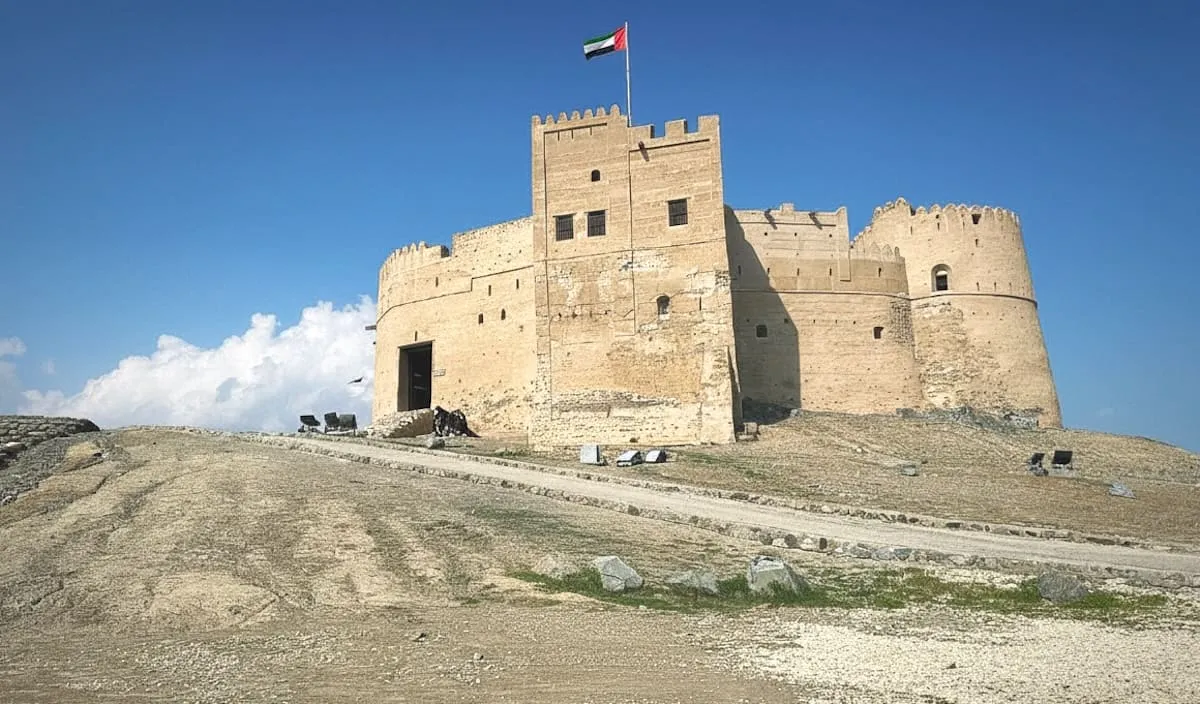
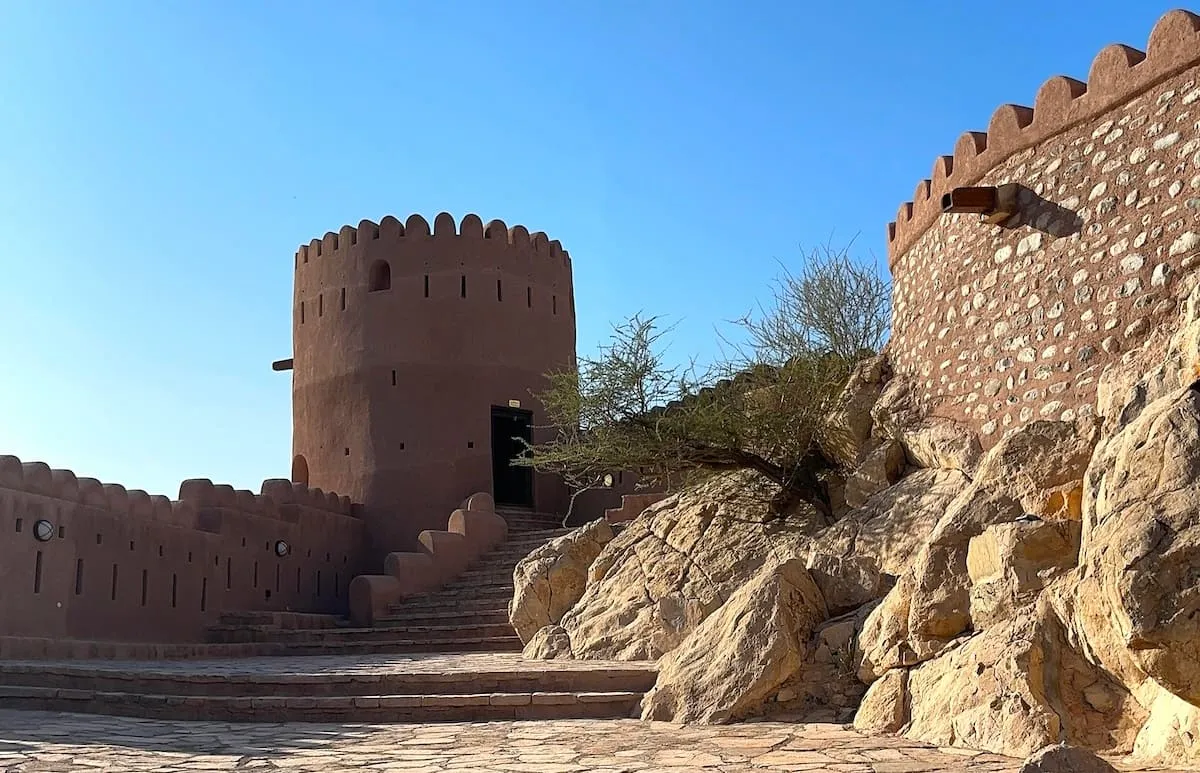
Extending over 610 square metres, Fujairah Fort impresses with the effective simplicity of its military architecture. The structure consists of three massive round towers and a square tower, strategically positioned to cover all potential angles of attack. At the heart of the complex, an interior courtyard served as a rallying point for defenders and housed daily activities in peacetime.
The builders used exclusively local materials: rocks extracted from the surrounding mountains, gravel, dried mud and traditional plaster. This construction adapts perfectly to the irregular terrain of the hill, creating a fortress that seems to spring naturally from the rock. The various rooms of the complex include the madbasa (reception hall), the former prison cells with thick walls, and several storage rooms for provisions and weapons.
What strikes the contemporary visitor are the imposing defensive walls pierced with loopholes allowing archers and early musketeers to repel assailants whilst remaining protected. The steep staircases, carved into the stone and devoid of railings, lead to the roof terrace from where guards scanned the horizon. Today, these same terraces offer breathtaking panoramic views of the modern city of Fujairah, the Hajar Mountains and the turquoise waters of the Indian Ocean.
Adjacent to the main fort, you'll discover a collection of restored traditional houses and an ancient mosque that complete this living tableau of Emirati heritage. The architectural ensemble forms an authentic testimony to life in the Emirates before the discovery of oil.
How and when to get to Fujairah Fort?
Fujairah Fort is open daily from 8am to 5pm, with completely free entry - a rare advantage that makes it an essential stop for any budget-conscious traveller. The site is located just 2-3 kilometres from Fujairah city centre and approximately 1 kilometre from the coast, easily accessible by car with free parking on site.
For an optimal experience, I strongly recommend planning your visit in the late afternoon, ideally two hours before sunset. The golden light that then bathes the centuries-old stones creates a magical atmosphere, and temperatures become more clement, particularly during the summer months when the heat can be overwhelming at midday.
Be warned: the ascent to the roof is via steep staircases without railings, which requires a certain amount of caution, especially if you're travelling with young children. Plan for comfortable, closed shoes, sandals are really not advisable for this climb.
In the immediate vicinity, don't miss the Heritage Village which perfectly complements the fort visit, as well as the small local museum which will enrich your understanding of regional history. The adjacent mosque, although not accessible to non-Muslims, is worth admiring from the outside for its traditional architecture.
According to TripAdvisor reviews, the complete visit generally takes between 20 and 30 minutes, with some visitors noting the "basic" nature of the experience (QR codes provide information, but there is no guide on site) whilst praising the authentic atmosphere and spectacular views that are worth the trip alone.
Treasures to Discover in the Surrounding Area
Fujairah Fort sits at the centre of a veritable concentration of cultural and natural heritage that amply deserves a full day of your time.
Fujairah Heritage Village, literally a few steps from the fort, immerses you in the daily life of Emiratis before modernisation. This restored village features traditional mud-brick houses, ancestral irrigation systems (falaj), and houses an art centre where craftspeople perpetuate traditional trades. Entry is also free, and a stroll through its shaded alleyways offers a striking contrast with the military fort.
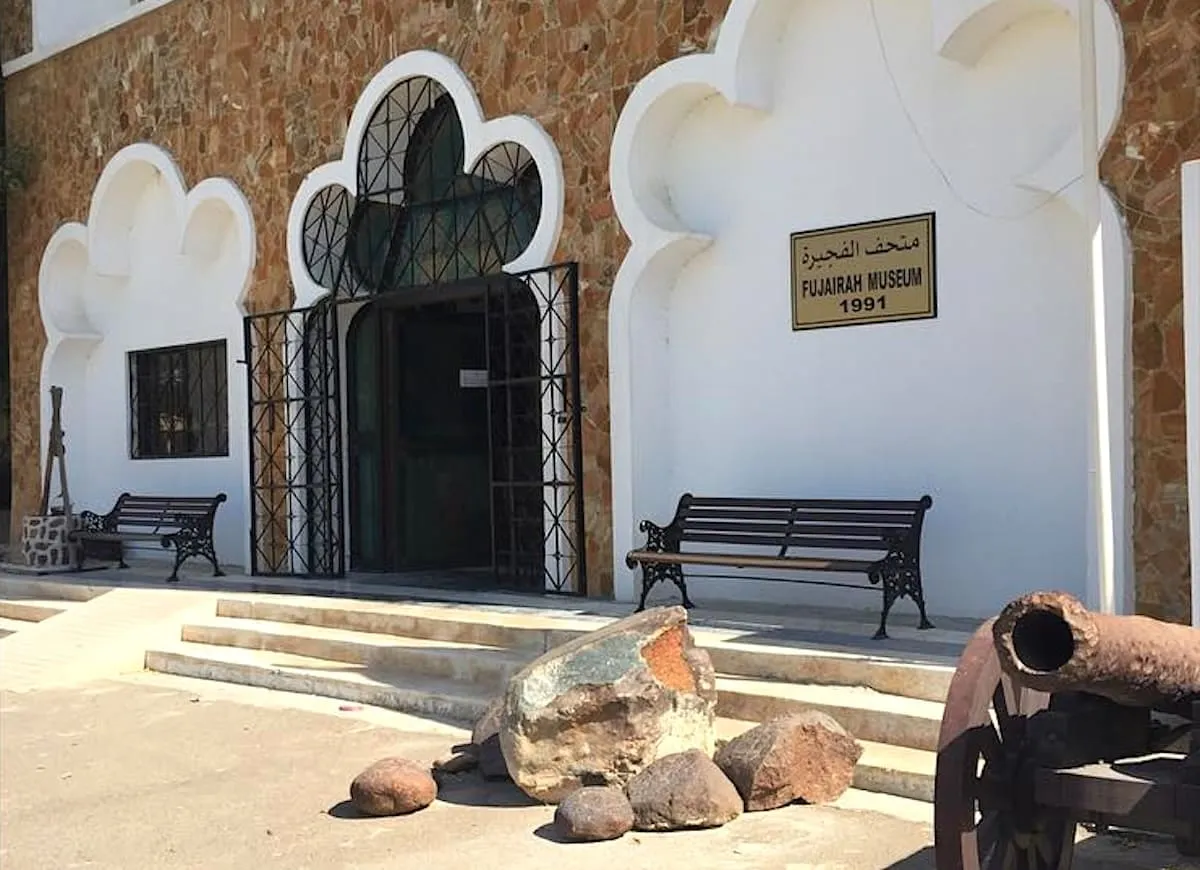
The Fujairah Museum, located near the fort, houses a fascinating collection of archaeological artefacts discovered in the emirate: pottery dating from the Bronze Age, ancient weapons, traditional jewellery and everyday objects that tell 4,000 years of local history. Allow approximately 1 hour to fully appreciate the exhibitions.
Just 2 kilometres away, the Sheikh Zayed Mosque in Fujairah, the second largest mosque in the Emirates after that of Abu Dhabi, impresses with its 80 domes and 6 minarets. Just opposite, Umbrella Beach beckons with its fine sand and famous colourful parasols, the ideal spot to cool off after an intense cultural morning.
For fortification enthusiasts, extend your exploration with Al Hayl Fort (15 km away), nestled at the foot of the mountains and offering similar architecture but in a spectacular mountain setting, or Bithnah Fort (12 km away), also restored and often quieter than Fujairah Fort. These three sites form a perfect circuit for understanding the emirate's defensive system.